You walk through the front door and immediately start forming an opinion. You like the kitchen. You're not sure about the flooring. The living room is bigger than it looked in the photos. And you

Dated: July 23 2025
Views: 406
Picture this: you fall in love with a home, only to find out it sits in or near a flood zone. What does that mean for you financially and long-term? We've had several buyers in recent months face this exact situation, so let’s talk about what it really means to buy a home in a flood-prone area.
Despite how it sounds, it doesn’t mean flooding only happens once every 100 years. A 100-year floodplain is an area with a 1% chance of flooding in any given year. That might not sound like much, but over a 30-year mortgage, it adds up to a 26% chance of experiencing a flood.
These areas are mapped and regulated by FEMA and used by insurance companies, lenders, and municipalities to assess risk and determine whether flood insurance is required.
If the home is in a high-risk area (typically labeled as Flood Zone A or AE), and you’re using a mortgage to purchase it, flood insurance will likely be mandatory. In Massachusetts, premiums can range anywhere from $800 to $2,500+ per year, depending on elevation, proximity to water, past claims, and your coverage amount.
And here’s the kicker: some homes that appear to be “just outside” a mapped flood zone may still be at significant risk, especially as storm patterns shift.
Whether or not you’re sold on the idea of climate change, insurance companies are. They’ve been quietly adjusting their risk models based on increasing storm frequency, rising groundwater, and localized flooding events.
FEMA flood maps are updated periodically, but many experts agree they lag behind the reality on the ground. So even if a home isn’t officially in a mapped zone today, future re-mapping could change that, bringing new insurance requirements and added costs.
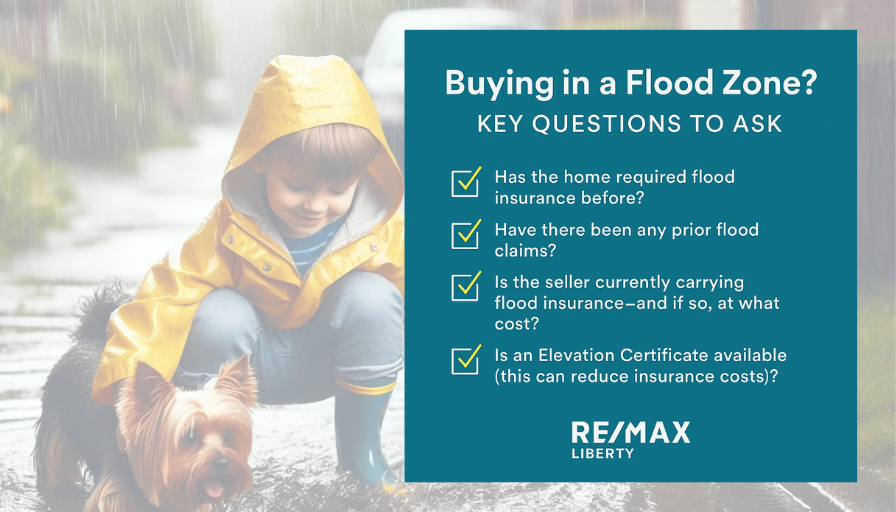
Has the home required flood insurance before?
Have there been any prior flood claims?
Is the seller currently carrying flood insurance- and if so, at what cost?
Is an Elevation Certificate available (this can reduce insurance costs)?
A good buyer’s agent will help you evaluate all of this before you move forward with an offer.
Flood zones don’t automatically mean you shouldn’t buy, but they do mean you should go in with eyes wide open. With rising insurance rates and shifting flood maps, it’s more important than ever to understand your risks, costs, and long-term responsibilities.
At RE/MAX Liberty, we help you weigh all the factors so you don’t fall in love with a home only to be blindsided by surprises after your offer is accepted.
💬 Got questions about a specific property or flood zone status? RE/MAX Liberty is Central Massachusetts' Trusted Guide to Real Estate. Feel free to reach out!

Buying or selling a home can feel overwhelming. My job is to make sure it doesn't have to. I work behind the scenes on nearly every transaction at REMAX Liberty, helping coordinate marketing, paperwo....
You walk through the front door and immediately start forming an opinion. You like the kitchen. You're not sure about the flooring. The living room is bigger than it looked in the photos. And you
You've spent months trying to buy a home. You got pre-approved. You searched. You toured homes. You finally found the right one. You put your offer in, and endured an agonizing day (or three) until
You bought your home. Now what? A Post-Closing Checklist for new homeownersTLDR? See our printable checklist at the bottom of the page.You made it. The offer was accepted. The inspection is over.
Winter in Central Massachusetts has a way of finding the weak spots in a house. A small draft becomes much more noticeable when temperatures drop. A clogged gutter can contribute to ice problems. A
 Massachusetts MLS Property Info Network (MLSPIN) - The property listing data and information set forth herein were provided to MLS Property Information Network, Inc. from third party sources, including sellers, lessors and public records, and were compiled by MLS Property Information Network, Inc. The property listing data and information are for the personal, non commercial use of consumers having a good faith interest in purchasing or leasing listed properties of the type displayed to them and
may not be used for any purpose other than to identify prospective properties which such consumers may have a good faith interest in purchasing or leasing. MLS Property Information Network, Inc. and its subscribers disclaim any and all representations and warranties as to the accuracy of the property listing data and information set forth herein. Last Update: September 22, 2026 5:24 PM UTC
Show More...
Massachusetts MLS Property Info Network (MLSPIN) - The property listing data and information set forth herein were provided to MLS Property Information Network, Inc. from third party sources, including sellers, lessors and public records, and were compiled by MLS Property Information Network, Inc. The property listing data and information are for the personal, non commercial use of consumers having a good faith interest in purchasing or leasing listed properties of the type displayed to them and
may not be used for any purpose other than to identify prospective properties which such consumers may have a good faith interest in purchasing or leasing. MLS Property Information Network, Inc. and its subscribers disclaim any and all representations and warranties as to the accuracy of the property listing data and information set forth herein. Last Update: September 22, 2026 5:24 PM UTC
Show More...
